Stanmore Country Park
Past To Present
History – Yesterday
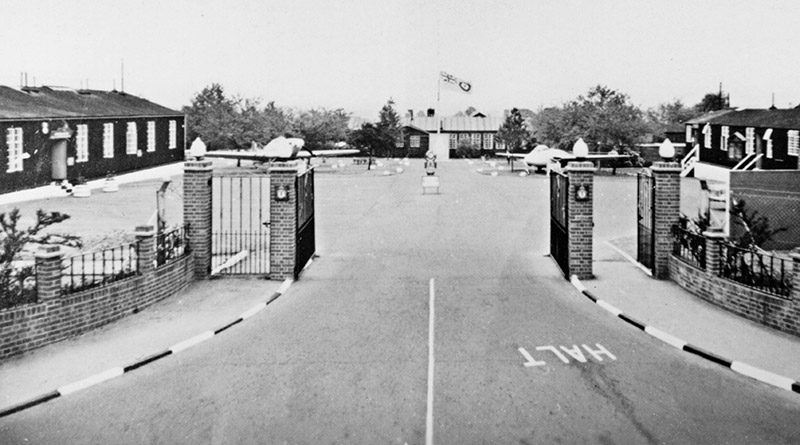
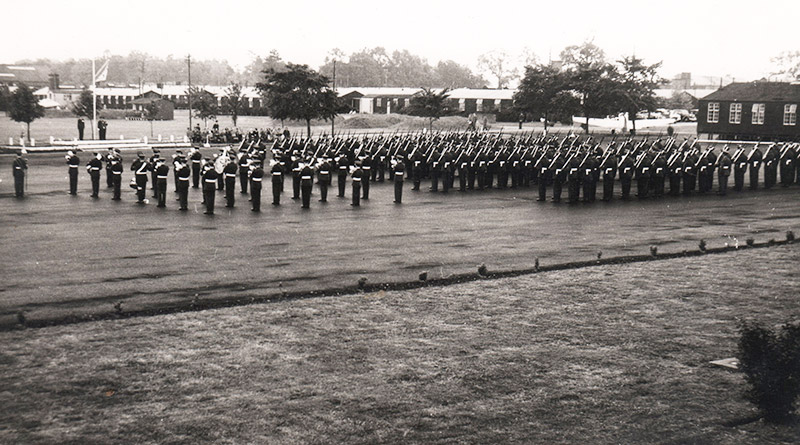
The site is part of the former RAF Bridgnorth, which opened in 1939 and closed in 1963. Though never an operational airfield, it was an important basic training camp through which thousands of recruits passed as part of their 8 weeks of basic training or “square bashing”.
Whilst little physical evidence exists for its past role, except for the old cookhouse chimney preserved as a war memorial on the Russell Close side of the park and the old concrete roads on the Hobbins side of the park. The memorial was restored in 2013 and now includes a plaque honouring the personnel who worked in the RAF; this restoration coincided with the 50th anniversary celebration of the camp.
There are two housing estates bordering the park called ‘The Hobbins’ and ‘Russell Close.’ The Hobbins were the married airmen’s quarters, whilst Russell Close was the married officer’s quarters. The original site provided accommodation for 3,500 trainees and 800 staff. Other buildings located on the industrial estate have been reused by local businesses.
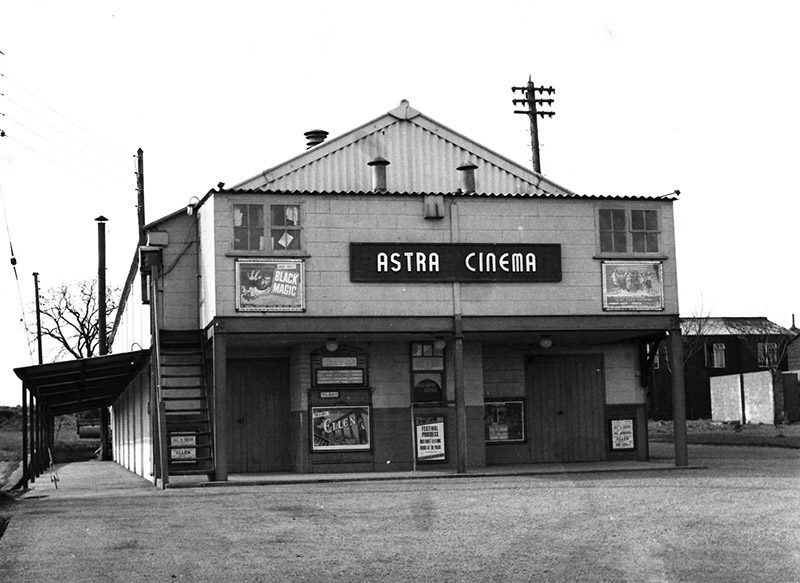
The current car park is located on what would have been one of the camp’s four parade grounds. The rest of the site was dominated by barrack huts, parade grounds, sports fields, bath houses, a camp cinema, classrooms, offices and equipment stores.
Local historian and RAF Bridgnorth history specialist Gwynne Chadwick, kindly gave us permission to use these historic photographs on our site information panels and are also shared again here for interest.
The history of the site is also preserved by the Friends of Stanmore (FOS) who have created a series of 6 information panels that incorporate the roundel and colours of the RAF.


Description / Biodiversity
A welcome retreat – Today
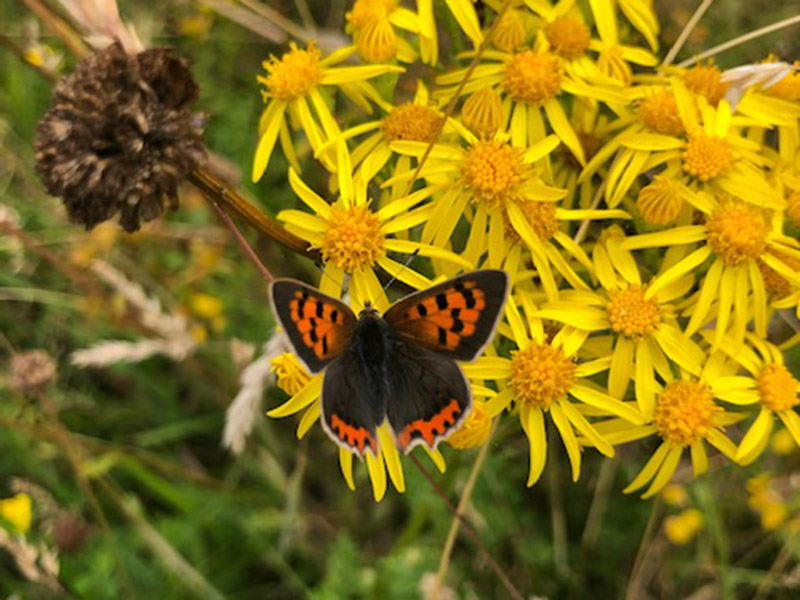
The parks 40 hectares (99 acres) of mixed woodland, areas of open grassland, including wildflower meadows, and several small ponds provide a range of habitats and breeding grounds for a varied fauna: insects; reptiles; amphibians; small mammals including bats; and a variety of birds including raptors.
In 2009, several nationally scarce species of hoverfly were found making use of dead wood on site. Preservation of habitat is important to protect vulnerable species and maintain biodiversity which gives our countryside animation and variety as well as helping to mitigate the impacts of climate change. The rural location of the park ensures low light, air and noise pollution. The informal nature of the park ensures it is chemical free which ensures limited impact on wildlife habitat from pesticides and fertilisers.
Tree density is high. Across the site, the FOS estimate 100,000 trees are growing including oak, beech, birch, elm, goat willow, hawthorn, hazel, maple and silver birch. Whilst much of the woodland is around 40 years old, the site does include some older and more established trees including oak, beech and sweet chestnut.
In addition, the FOS have planted a community orchard with around 20 fruit trees, which seeks to promote varieties that have historical connections to Shropshire.
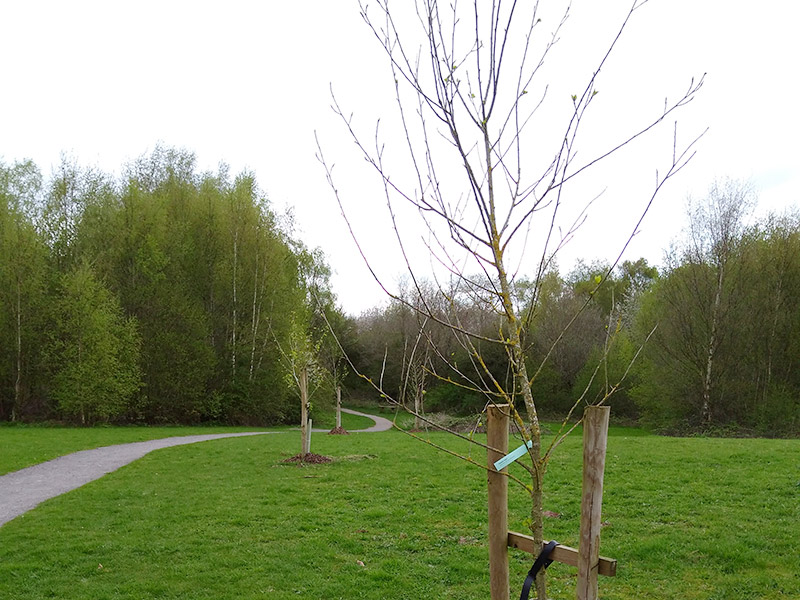
Several large black poplar trees (Populus nigra), probably planted in the days of the RAF base, used to grow in this area of the park and so in 2016, a new avenue of these trees was planted. This broadleaf deciduous tree is native to Britain and can live for up to 200 years. However, despite this longevity, black poplars are often considered one of our most endangered native trees.
Black poplar is an important food source for the caterpillars of many moths, whilst the catkins provide an early supply of nectar and pollen for bees and other insects. A survey carried out in 2009 found rare species of hoverfly and other invertebrates living amongst the deadwood of the old poplar trees and shows the immense wildlife value of decaying wood.
Adjacent to the RAF Memorial is a wildflower area that was planted in 2016. It is designed to be dominated by poppies, the traditional flower of remembrance, together with other cornfield species including corn chamomile and cornflower. Together, these flowers provide important food sources for bees, butterflies and other pollinating insects.
In total, 5 owl, 8 bat and 30 bird boxes have been installed across the site. In the winter of 2021, a box survey recorded an 80% occupancy rate. Furthermore, other surveys have demonstrated 3 bat species are active within the park.

Development and Improvements
A measure of the success of the Friends of Stanmore in community engagement is provided by the award of several grants:
In 2023, Worfield and Rudge Parish Council provided a further £500 grant to purchase spring flowering plants ‘in the green’.
In 2022, the park was awarded a total of three grants. Shropshire Council successfully bid for one grant and FOS two grants. Shropshire Council was awarded a £75,000 Community Fund grant by Severn Trent. The money was used on woodland management to improve the woodland structural diversity and improve habitat connectivity, to increase size and water retention abilities of two seasonal ponds, to upgrade paths around the park, to train volunteers in willow hedge creation and maintenance, and create and install a Family Discovery Art Trail. Find out more about the Family Discovery Art Trail here.
The FOS grants comprised £1015 from the Co-op ‘Community Fund’ to purchase some seating where people can meet and talk (chatty benches). The second was £500 from Worfield and Rudge Parish Council to create a Platinum Jubilee garden and seating area.
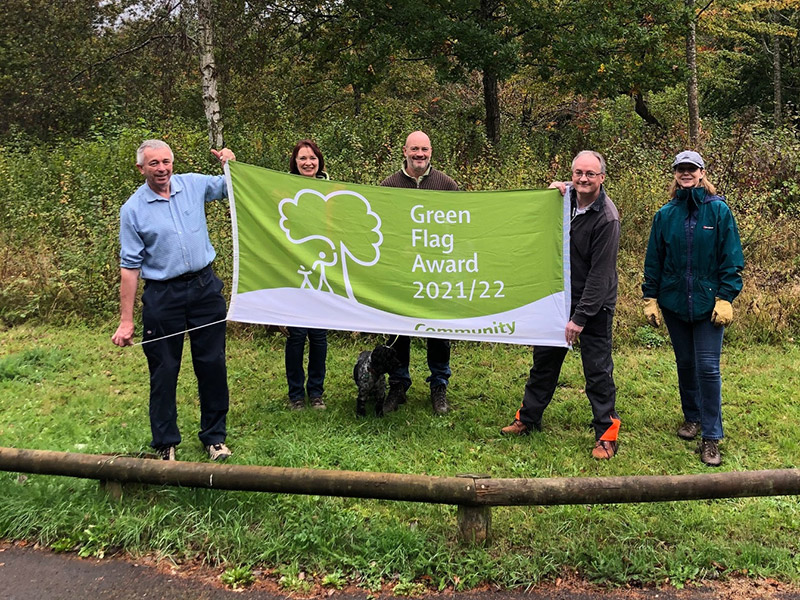
In 2020, the FOS were awarded £600 by Shropshire Town and Rural Housing (STAR) Community Chest fund. The money was used to purchase the flagpole situated at the junction of the industrial estate road with Green Lane, from which our awarded Green Flag flies proudly.
In 2017, the FOS was awarded £500 by Veolia as part of its “Make a Difference” community fund. These monies were used to install 5 owl, 8 bat and 30 bird boxes across the site.
In 2015/16 Tesco awarded the FOS £8,000 through their ‘Bags of Help’ community fund. This grant was used to upgrade paths, plant the community orchard, the row of black poplars and design and install 6 information panels that celebrate the park’s history and incorporate the roundel and colours of the RAF.

Green Flag Community Award
Since 2019, the FOS have successfully been awarded the Green Flag Community Award. This global award recognises and rewards well managed parks and green spaces and is applied for by the Friends.
Sites must be welcoming, be healthy, safe and secure, be well maintained and clean, demonstrate good environmental management, be unique and have its own character and most importantly community involvement.
The site is judged annually and must continue to meet all the criteria.
We proudly display our Green Flag Community award at the park entrances and on the flagpole at the A454 junction with Estate Road.